
187: Zen Is Not A Religion
SUBSCRIBE TO UNMIND:
RSS FEED | APPLE PODCASTS | GOOGLE PODCASTS | SPOTIFY
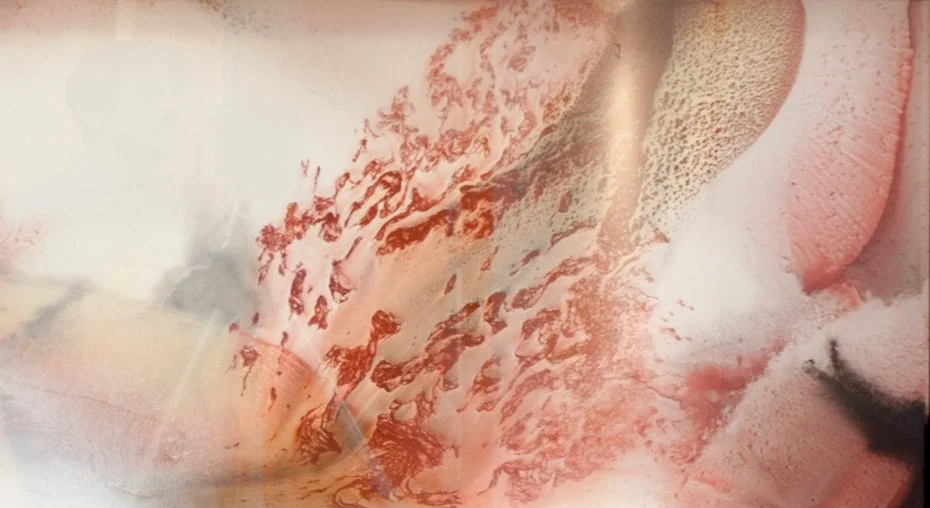
We Don't Die
"Sensei, when I die..."
he said to the Zen master —
"You don't die!" he said
Welcome to another segment of the UnMind podcast and DharmaByte column. I would like to share a concern about something I have witnessed in the propagation of Zen. I am afraid that Zen in America is being categorized — in my opinion, erroneously -— as a "religion," during its second century in the West. As Zen assimilates into the volatile and increasingly violent American cultural milieu — primarily under the influence of Christian and Judaic traditions — Zen is widely, and wildly, misinterpreted as a faith or belief system. Buddhism is counted as one of the world's big four religions, we are told.
But unlike Christianity, Islam or Hinduism, as well as Judaism, Buddhism is not a form of theism. I would not go so far as to categorize it as atheism — which is said to be the strongest form of theism — but that the question of the existence or nonexistence of God with a capital "G," or a pantheon of gods with lower "g's," simply does not arise. The traditional Zen saying would classify the term "god" as a "head upon a head" — a superfluous addition — on top of the reality that we all face in life. If god is what god is purported to be — i.e. omniscient and omnipresent — then there is no need to name that concept. More to the point, Zen is not based on a set of beliefs, or doctrine, but upon direct experience, whether yours or that of Buddha — who, after all, was not a Buddhist, any more than Christ was a Christian. Both were human beings, just like you.
According to my poor understanding, in Buddhism, no independent, self-existent entity can be found anywhere in the universe. "Universe" is another word for naming the totality, but it is not conceived of as a conscious being, though the phrase "Vairocana Buddha" or "Cosmic Buddha," used to designate the concept, may suggest as much. An AI / Wikipedia summary says:
Vairocana is the "Cosmic Buddha" or "Great Illuminator" in Mahayana and Vajrayana Buddhism, representing the ultimate, formless truth (Dharmakaya) and the source from which all Buddhas emanate. Unlike historical figures, he is a universal Buddha, often depicted at the center of the Five Dhyani Buddhas, embodying wisdom and dispelling ignorance.
The "he" pronoun here is a tell — that Buddhist cultures of origin were patriarchal if not misogynistic — and any spiritual beings were cast in the mold of humanity. A section in the ancient Ch'an poem, Hsinhsinming—Trust in Mind, refers to this idea of an essential truth from the perspective of personal experience, characteristic of Zen:
If the mind makes no discriminations
the ten thousand things are as they are of single essence
Understanding the mystery of this One-essence
we are released from all entanglements
When all things are seen equally the timeless Self-essence is reached
Note that this underlying unity, or noumenon in today's vernacular, is a thread running through the "ten thousand things," or all phenomena, not just human consciousness. "Timeless Self-essence" may smack of the western concept of an eternal soul, but this assumption amounts to a kind of cultural appropriation, interpreting the 7th century Chinese view of "essence" as a self-existent entity, which is anathema to Buddhism.
The historical Buddha, Shakyamuni, testified to the fact that he found no evidence of any such transmigrating soul, or the Sanskrit "atman," in his experience in meditation. He used an analogy to what was at that time a familiar object, a chariot — which, when disassembled and the parts laid out on the ground, no longer exists. The functional reality exists only in the assemblage. The contemporary term of art for what remained was sunyata, usually translated as "emptiness." But this term does not merely point to an absolute void, as it is often misinterpreted. Again, from our online gurus:
Śūnyatā (Sanskrit) or Suññatā (Pali), commonly translated as "emptiness," "voidness," or "openness," is a foundational Buddhist philosophy referring to the lack of inherent, independent existence in all phenomena. It means all things—including the self—are empty of a separate, permanent ego, existing instead in a constant state of interdependence and change.
I lean toward "openness," and note that "constant interdependence...and change" do not amount to a "state." There is nothing static about it. All things found in the universe are not things at all, but interconnected causes and conditions in constant flux — wave functions in science-speak. Likewise, aggregate reality: uni-verse, is not itself a "thing."
The normal concept of "God" as a transcendent being does not stray far from this idea, except in depictions of Him or Her as human in form. As we are part of this universe, the idea that we can realize this unity with God or the cosmos permeates most religious belief systems. In Zen this proposition has the more prosaic connotation of being the truth, whether we know it or not. If God is anything, God is everything. The prospect of realization or awakening requires relinquishing our dualistic conceptions regarding this truth. Again, the great Chinese sage captures the dilemma in relatable terms:
Denying the reality of things misses their reality
Asserting the emptiness of things misses their reality
The more we talk and think about it
the further astray we wander from the truth
Stop talking and thinking and there is nothing you will not be able to know
So while I maintain that Zen is not a religion in the conventional sense, what it is pointing to is the essential founding impulse of all religions, as well as philosophy: a realization of the truth of existence. Whether one interprets that realization as a religious experience or not does not change the fact of it. Again, Master Sengcan reminds us:
Now there are sudden and gradual
in which teachings and approaches arise
With teachings and approaches distinguished
each has its standards
whether teachings and approaches are mastered or not
reality constantly flows
"Sudden and gradual" here refers to the so-called Southern and Northern schools of Zen in China that preceded Sengcan by a couple of centuries. But they could just as well refer to today's various theistic religions with their multitude of denominations, or even to schools of philosophy, as well as theories and hypotheses of science.
I italicize that last phrase, "reality constantly flows," as a simple truth, one that does not necessarily negate any of the various religious or philosophical worldviews, but amounts to a universal caveat: that whatever belief you may adhere to, it cannot possibly capture the totality of reality.
Zen inquiry is said to take off from where philosophy leaves off, the latter having gotten there in a more roundabout manner. Whatever the starting point and mode of analysis, finally we are left with the "hard problem of consciousness," to co-op the phrase coined by the philosopher David Chalmers. Or as Master Dogen is said to have said, "At last we are left with ambiguity."
One particular way of understanding various approaches to practice was taught by Kuei-feng Tsung-mi. Tsung-mi was a C’han master, and also the fifth Ancestor of the Hua Yen tradition in the Tang dynasty in China . He spoke of five different kinds of Zen, which are bompu zen or “usual zen,” gedo zen or ” Outside Way zen,” shojo zen or “Hinayana practice,” daijo zen or “Great Practice zen” and saijojo zen or “Easy and perfect” zen. In this sense, we could say that zen with a small “z” means simply a form of practising.
Begin Here: Five Styles of Zen
by Ven. Anzan Hoshin roshi
Zazen-ji, October 14, 1989
[from the book, “Before Thinking”]
Let us embrace this hard problem, and the inconclusiveness of its resolution, as we continue exploring the original frontier of Mind, and sharpening the razorblade of Zen.
To make these postings a bit more interactive, please let me know if you have any subjects you might like me to address in future. My current focus is on the two underlying themes of my first and second published volumes, "The Original Frontier" and "The Razorblade of Zen," both available online.
The former is a kind of user's manual for meditation, specifically of the Zen flavor, or zazen; the second is about where I see Zen fitting into the American cultural milieu as a third, alternative way, between the extremes of rationalism and science, leading to secular reductionism on one end of the spectrum, with those of theism and religion, or fundamentalism at the outer reaches on the other end. Zen lives in the middle.
In these two books, both the personal and social spheres of practice-experience are engaged, separated for clarity of message. Implications for the natural sphere in the long term — if it is not already too late, in terms of climate change, for one example — I leave to you. Zen may offer our last and best hope for world peace, and saving our home planet. Implications for our understanding — or better, comprehending — the universe, and our place in it, I also leave to you. You are more likely to find your answers to the deeper questions on the cushion than off of it. But — no guarantees.

Zenkai Taiun Michael Elliston
Elliston Roshi is guiding teacher of the Atlanta Soto Zen Center and abbot of the Silent Thunder Order. He is also a gallery-represented fine artist expressing his Zen through visual poetry, or “music to the eyes.” You may purchase his books, “The Original Frontier” or “The Razorblade of Zen” by following the links.
UnMind is a production of the Atlanta Soto Zen Center in Atlanta, Georgia and the Silent Thunder Order. You can support these teachings by PayPal to donate@STorder.org. Gassho.
Producer: Shinjin Larry Little
