
187: Dichotomy
SUBSCRIBE TO UNMIND:
RSS FEED | APPLE PODCASTS | GOOGLE PODCASTS | SPOTIFY
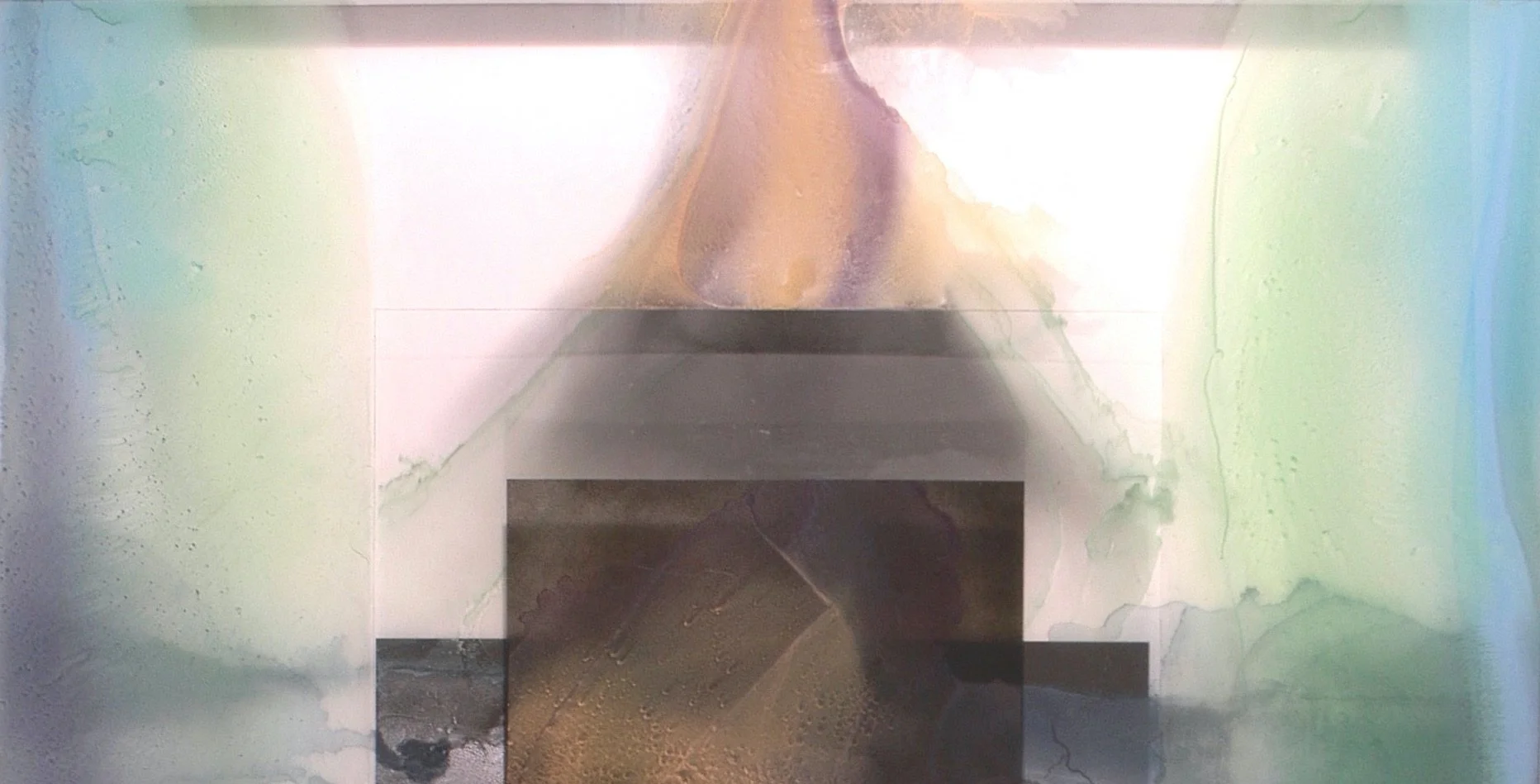
FLOWERS BLOSSOM
Flowers all blossom
unaware of their beauty —
and uncomplaining
Welcome, once again, to my UnMind podcast, also published on Substack, and as my Dharma Byte in the newsletter of the Silent Thunder Order (visit www.STOrder.org — STO). Please let me know if there is a subject you would like to hear about in a future segment. In STO, we are pioneering a creative, collaborative approach to establishing true Zen community (Skt. sangha) in the USA.
This haiku poem, in the traditional 5,7,5-syllable format, I composed some years ago.
Memorial day this year happened to coincide with the 51st anniversary of wedding my long-suffering wife, the love of my life, a living bodhisattva of compassion. The bouquet I presented her at our breakfast date had a few buds that had not yet blossomed, until this morning. Recalling my mother often saying, "Don't bring me dead flowers!" I realized that cut flowers are, indeed, if not dead already, then at least dying, as we trim them and put them in a vase, prolonging the decaying process with water and flower food. I revised the haiku to read:
Flowers blossom all
unaware of their beauty —
though doomed to failure
Repositioning "all" so that it modifies both "flowers" and "unaware" depending on the reader's interpretation, the last line reflects my mother's cold-eyed insight that cut flowers are no longer living, and that the seeds they produce through pollination have the chance of a snowball in hell of germinating.
This brings up another common trope of modernity, the concept of "dichotomies." Giving dying flowers to celebrate the living is a kind of dichotomy, or contradiction. My root teacher, Matsuoka-roshi, was prone to say, "There is no dichotomy in Zen!" I think he was implying that any dichotomy is in the eye — or mind, or both — of the beholder. Suffering from obsessive curiosity as to all things verbal, I looked up the term in the New Oxford American Dictionary bundled with my MacBook Pro:
di•chot•o•my
noun (plural dichotomies) [usually in singular] a division or contrast between two things that are or are represented as being opposed or entirely different: a rigid dichotomy between science and mysticism. • Botany repeated branching into two equal parts.
One of the most common dichotomies — speaking of a "rigid dichotomy between science and mysticism." and which has become a trope in the USA, and perhaps all over the world — is the expression, "There are two kinds of people in the world..." followed by the speaker's perspective on some defining difference between their worldview and that of others. My rather circular version is "There are two kinds of people in this world: those who believe there are two kinds of people in this world, and those who don't."
But seriously, folks...
It occurs to me that one of the many such distinctions that do make a difference — particularly on the social level, and with ramifications in the natural sphere — is of religious viewpoints. The "first kind of people in the world" believe that there is a loving creator God watching over humankind — His children made in His image — protecting us from the worst consequences of our actions, or at least assuring us that they must be in some way the manifestation of His will.
A current example is that of climate change. If our most dystopian fears come to pass, anything coming to pass on such a grand scale must be part of God's plan, rather than an unintended consequence of our collective action, mustn't it? Wouldn't it be ironic if the human race were to wipe itself out, based on a mistaken belief that our reckless stewardship of the planet is under the control of a loving God, who would surely not allow such a thing to happen.
It begs the existential question: What if we are wrong?
We may be forgiven for our resistance to elevating such a belief to the lofty level of "thought," which is held in such high esteem in Western philosophy. "Religion" as such was supposedly replaced by "Reason" following the Enlightenment, as deserving of our highest reverence. In its most extreme manifestation, this worldview — shared by the "second kind of people in the world" — devolves to "secular reductionism," widely reviled by theistic creationists as reducing the existence of humanity to some kind of evolutionary fluke.
The second kind subdivide into two camps as well — those who are agnostic on the concept of the existence of God as a being, though it is unclear whether or when, and under what circumstances, they suppose they might find an answer to the question — and those who take the contrarian position, defaulting to atheism, which some mock as the strongest form of theism, by the theory of opposites. You can't have atheism without theism. A few atheists enjoy a degree of fame and fortune from their efforts railing against the popular tide of conventional belief systems.
Buddha knew that his teaching would be swimming upstream against the prevailing tide of contemporaneous beliefs, such as that of the atman, or soul, of Hinduism. However, he apparently did not make a public case of it by challenging the political hierarchy of the time, which was based on Hinduism, and in which he enjoyed a privileged position as a prominent member of the second highest caste. Instead, he shared his views with his followers for reasons of personal salvation. Buddhism promised to reform society by offering an alternative to the status quo, which he interpreted as motivated primarily by self-striving. His doctrine began with challenging the belief in the existence of the self, not in that of God, or gods.
If this manifestation of two contrary and opposed worldviews of believers and nonbelievers — one requiring hard evidence, the other only faith — stopped at the boundary between the personal and social spheres, its unintended consequences would be relatively trivial, in their impact on the world we live in. But when the claim is made that the ways of the world, including the machinations of mankind, reflect the will of God — in particular those people who are likeminded, and part of our political cohort — the worst impulses and basest motives of men are enabled in His name, not ours.
We are now witness to an international situation in which the most powerful men in the world are child killers and / or child molesters; take your pick. It is impossible to imagine anything more selfish than that. Their family, friends and supporters are implicated to a degree proportional to their proximity to the inner circles of power. Six degrees of non-separation. That they do not, or cannot, see this fact, and own up to it, constitutes an undeniable manifestation of the root of the trouble that Buddha identified as "ignorance."
According to his model of the Twelvefold Chain of Interdependent Co-arising, everything arises out of a kind of universal ignorance, including most centrally for humans, the conviction that we are independent, existent entities — i.e. the constructed self. This ignorance is, originally, essentially innocent: a case of simply not-knowing. But when this sense of self is taken to be real, it intervenes in our judgment calls in navigating the world, leading us to commit all kinds of actions in defense of it. Willful ignorance, that is.
But again: What if we are wrong?
What if what we take to be our persona, our very own self — stemming from the very convincing assembly of the body-mind complex: the six senses, five aggregates, DNA, et cetera, implying a fundamental bifurcation into "self" and "other" — is a kind of categorical error, a rudimentary, ingrained confusion?
The sixth ancestor in China, Master Huineng, was famous for saying, "Show me your face before your father and mother were born!" or words to that effect. What if what we are now — channeling through this biological body — is precisely what we were, before this body was born? What if we will be exactly the same, after this body dies?
My understanding of one Buddhist teaching is that desire — the primordial desire for existence itself — precedes birth, and indeed, is the impulse that logically leads to birth. However, to assume that this idea necessarily implies the existence of a self or soul, an entity of some sort that precedes birth, a basic tenet of Hinduism's doctrine of reincarnation, namely the atman; or that the soul comes into existence with the advent of birth in this lifetime, which I take to be a fundamental doctrine of Christianity; is to impute to Buddha's teaching the very idea that he refuted with his doctrine of anatman: he found no evidence of such a being in his transformational spiritual awakening.
In the Heart of Great Wisdom Sutra chanted in Zen centers and monasteries around the world on a frequent basis, the implication is that in Zen meditation, we progress through the Five Aggregates of sentient existence until arriving at "consciousness only," our awareness shifts to "no consciousness also." Or as Buddha is said to have taught, a "turning about in the inmost consciousness," Master Dogen's "backward step" of "turning the light around to shine on the self."
This "no consciousness" is not the absence of consciousness, but the necessary complement to consciousness itself – the resolution of the apparent dichotomy. You cannot have consciousness without "no consciousness." You cannot have impermanence without permanence. You cannot have being without nonbeing, as the great Ch'an poem illustrates:
Emptiness here; emptiness there —
But the infinite universe stands always before your eyes
Infinitely large; infinitely small — no difference
For definitions have vanished, and no boundaries are seen
So, too, with Being and Non-being
According to this principle of no dichotomy in Zen, then, even the existential question resolves itself into a complementarity. There is no being without non-being. The dichotomy exists only in our interpretation.
Paraphrasing Krishnamurti, don't "Think on these things"; Sit with these things.

Zenkai Taiun Michael Elliston
Elliston Roshi is guiding teacher of the Atlanta Soto Zen Center and abbot of the Silent Thunder Order. He is also a gallery-represented fine artist expressing his Zen through visual poetry, or “music to the eyes.” You may purchase his books, “The Original Frontier” or “The Razorblade of Zen” by following the links.
UnMind is a production of the Atlanta Soto Zen Center in Atlanta, Georgia and the Silent Thunder Order. You can support these teachings by PayPal to donate@STorder.org. Gassho.
Producer: Shinjin Larry Little
